

Most clients arrive at our studio after meeting two or three other designers. They've already understood the portfolios. They've absorbed the price ranges. What they're still trying to assess is harder — and rarely articulated directly. What will it actually be like to spend the next two years on a project together?
That is the question this article is for.
Choosing an interior designer for a major residential project is closer to choosing a long-term collaborator than choosing a service. The work itself is technical, but the relationship is personal. The decisions are sequential. The trust accumulates or erodes over months. Most things that go wrong in luxury residential design — and they do go wrong, on every project — are problems of process and communication rather than taste.
This article is about how we approach that. How we structure a project. How we stay involved. What we ask of clients. And how we handle the parts of the work no portfolio shows.
The first meeting
Before any contract, any concept, any pricing — there is a first meeting. We treat it as the most important conversation of the project, because everything that follows is shaped by what we learn in that hour.
It usually takes place at our studio or at the client's property. Sometimes both, in sequence. We don't ask clients to come prepared with mood boards or references. We ask them to come prepared to talk about how they actually live. How they use the rooms they currently inhabit. Which spaces they love and which they avoid. What a typical morning looks like, and a typical Sunday afternoon. Who is in the house most often — and who else needs to feel at home there.
The brief almost always lives in those details rather than in the formal brief itself.
We listen for what isn't said as carefully as what is. A client who talks about entertaining but never about retreating tells us something. A client who arrives with a list of materials but no comment on light tells us something else. The role of the first meeting is to translate a life into the beginnings of a design language. That can only happen in person, unhurried, and without an agenda.
How we structure a project
A typical major residential project with us runs in five phases.
Concept design — six to eight weeks. We develop the spatial logic, the material palette, the architectural moves. By the end, you've seen the home in plan and elevation, the rooms in atmosphere, and the key decisions are agreed in principle.
Design development — eight to twelve weeks. Every element is resolved in detail. Joinery drawn at scale. Lighting plans coordinated with the electrical engineer. Materials specified down to finishes and edge profiles. By the end, the project is ready to price.
Technical drawings and procurement — twelve to twenty weeks, often running in parallel with the start of building works. Construction-stage drawings produced, suppliers confirmed, lead times secured, FF&E ordered. This is the longest and least visible phase, and the one where the difference between studios is most pronounced.
Construction and installation — usually nine to eighteen months on a major residential project, depending on scale, complexity, and listed status. We attend site weekly, sometimes more, and remain in close dialogue with the contractor throughout.
Final installation and completion — the last four to eight weeks, when the project moves from a building site back to a home. Furniture arrives. Art is hung. The home is set up, in detail, before the clients walk back through the door.
We share a written schedule at the start of every project, updated weekly. Clients always know which phase the project is in, what is on our desk that week, and what is on theirs.
How we stay personally involved
I run a deliberately small studio, and I do so because it allows me to remain personally present on every project we accept.
I attend the first meeting and every key decision-making meeting that follows. I am on site at every major site visit. Every concept that leaves the studio is one I've personally developed or signed off on. Every specification — the marble, the joinery, the lighting, the textiles — passes through my hands before it reaches a contractor.
This is not how every luxury studio operates, and it is the single thing I most often hear from clients who've worked with us after working elsewhere. They tell me they thought they were hiring a founder, and discovered they were working with a junior. They tell me decisions reached them through three layers of communication. They tell me the personality they responded to at the pitch meeting was not the personality that managed their project.
We deliberately take on fewer projects so that this doesn't happen with us. The result is that clients work with me, not with a delegated team. Our process is built around that level of personal involvement, and the cost of admission is that we cannot accept every project we'd like to.
“The decisions are sequential. The trust accumulates or erodes over months. Most things that go wrong in luxury residential design — and they do go wrong, on every project — are problems of process and communication rather than taste.”
What we ask of our clients
This is the part of the process most studios don't articulate, and most clients wish someone had told them earlier.
A residential project of any meaningful scale requires the client to be available, decisive, and openly communicative across two years. Not at every moment — but at the moments that matter. Concept sign-off. Material approvals. Site visits during construction. The few decisions that genuinely cannot be made without you.
We try to protect our clients from being overwhelmed by decisions. We do not pass minor choices upward. But for the decisions that do require a client's voice, we ask for engagement, not delegation.
We also ask for openness about budget. Not because we want to inflate it — but because we want to spend it well. A budget held back from us is a budget we cannot allocate intelligently. The clients who give us a clear figure at the start, and who allow us to share where we believe additional spend is warranted, are always the clients who end up with homes they're most pleased with.
And we ask for patience during the phases when there is nothing visible to share. The longest and most important phases of a project — design development, technical drawings, procurement — produce very little to look at. The work is happening. It just isn't photogenic. Trust during these phases is what allows the visible phases to land.
How we handle the parts no one talks about
Every long project carries friction. Listed status creates planning constraints that emerge mid-design. Suppliers fall through. Materials arrive damaged. Conservation officers request changes. Contractors discover original detailing behind plasterwork that has to be preserved rather than removed. Decisions made in month four sometimes need to be remade in month fourteen because the room has spoken differently than expected.
These moments are not failures of the process. They are the process.
What separates a well-handled project from a poorly-handled one is not the absence of friction, but how it is met. We treat every issue that emerges as ours to resolve — not the client's. We communicate quickly when something goes wrong, present the options before raising the problem, and recommend a path forward. We track every supplier issue, every site discovery, every conservation requirement, and we hold the responsibility for keeping the project on course.
A recent Grade I listed restoration we completed in Belgravia ran three years from start to finish. Almost every phase carried unexpected discovery — original cornicing requiring specialist restoration, structural conditions that emerged once finishes were removed, listed building consent processes that took longer than the original schedule allowed. The home that resulted is one of the most beautiful interiors we've ever produced. None of the difficulty is visible in the final photographs. All of it shaped the result.
This is what we mean when we say that craft and discipline have to operate together. The craft is visible. The discipline is what allows it to exist.
A note for clients considering a project
Choosing a designer is one of the more consequential decisions a client makes in any decade. The home you build with the right studio shapes how you live for years afterwards. The home you build with the wrong studio shapes how you feel about your home for the same length of time.
We treat the decision as such — both when clients are considering us, and when we are considering clients. The first meeting is for both sides. The fit matters as much as the brief.
If you're considering a residential project in London or beyond, and want a longer conversation about how we might work together, we'd be glad to talk.
See our completed projects.Read more notes from our studio.Contact us here.
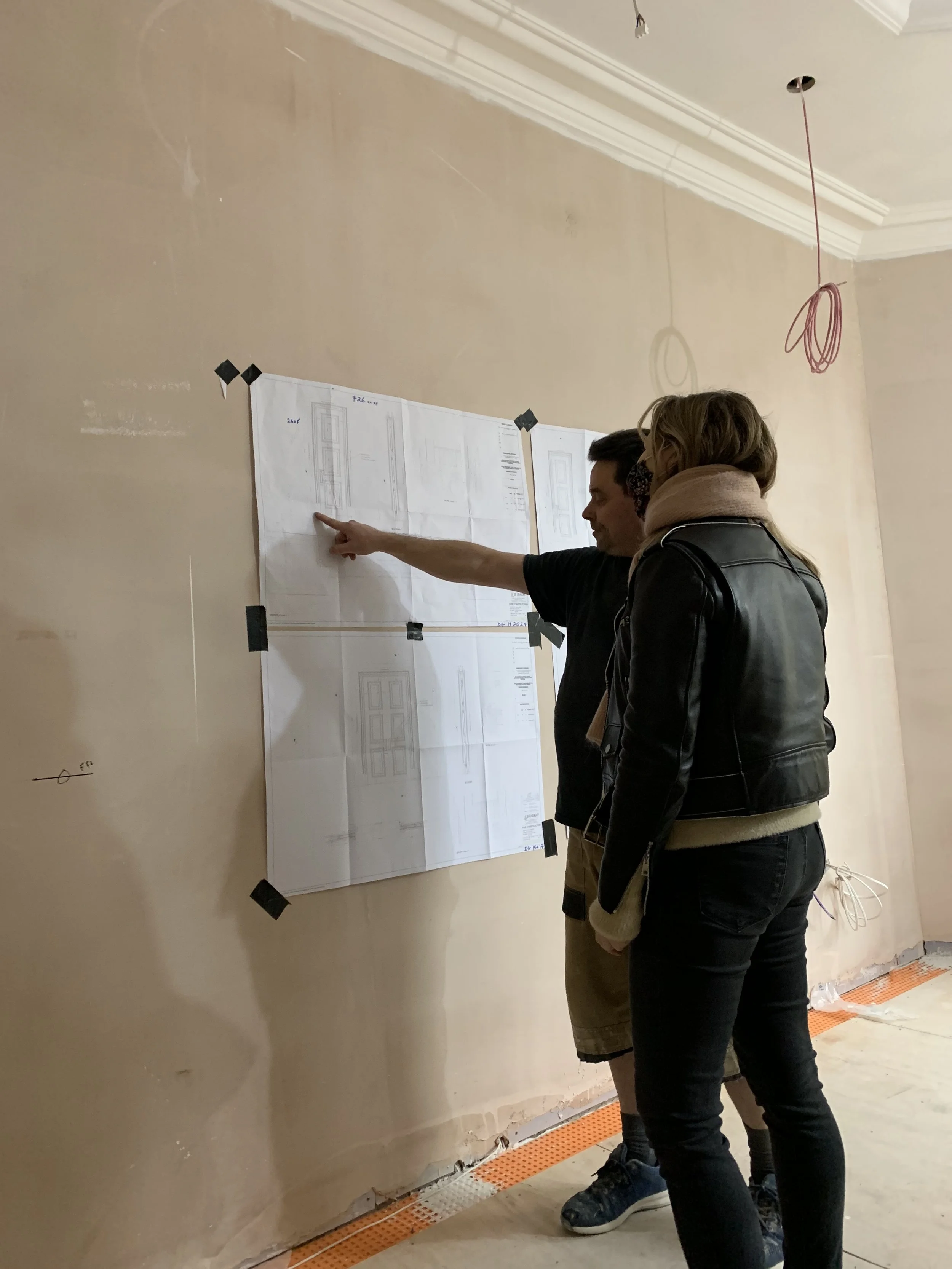
Magdalena Gruszczyńska, Founder and Creative Director, on site at our Mayfair project on Charles Street, reviewing doors ahead of installation.
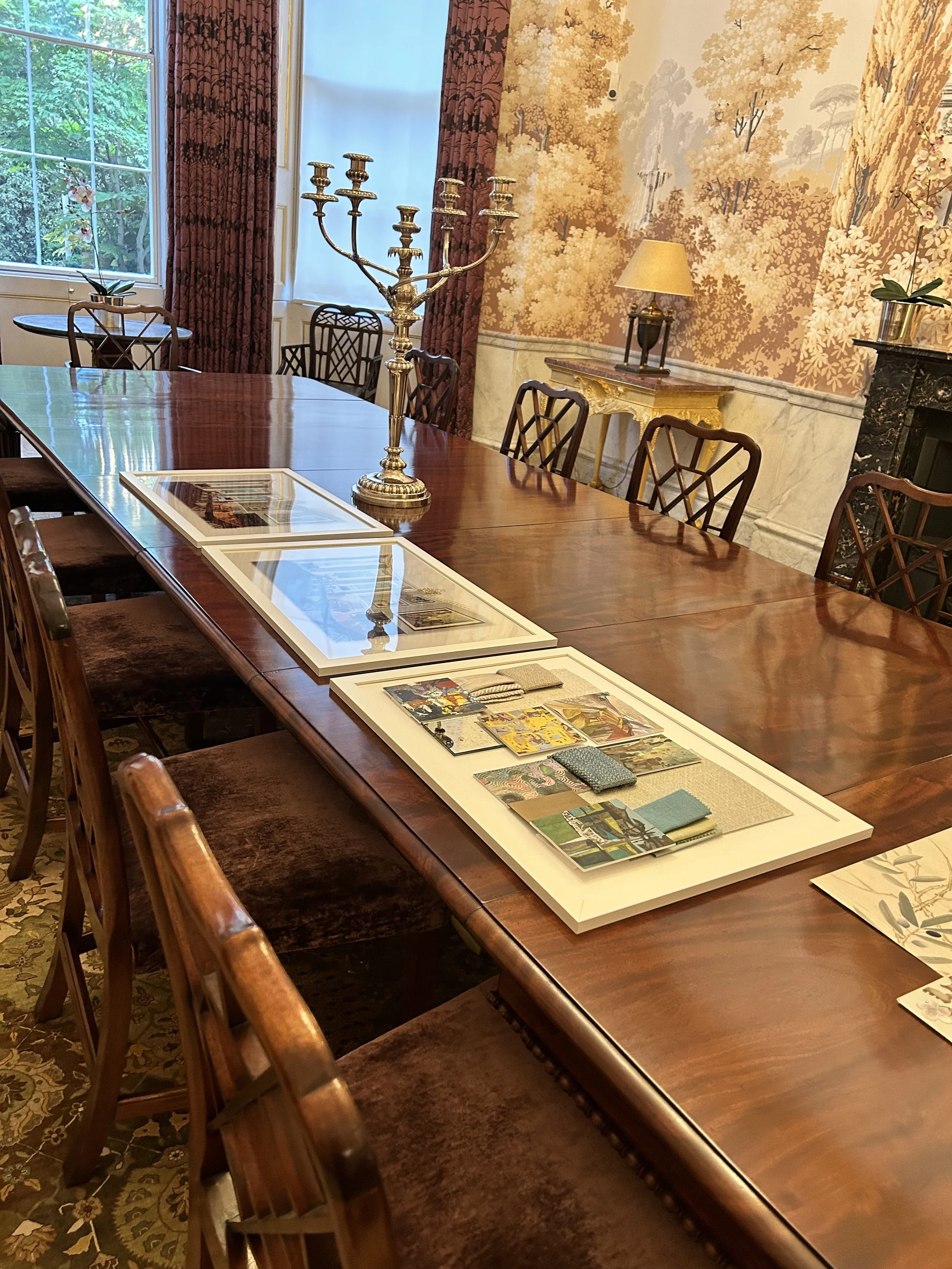
A Supremati client presentation — 3D visuals, fabric samples, finishes, and art proposals developed for our Grade I listed Belgravia project.
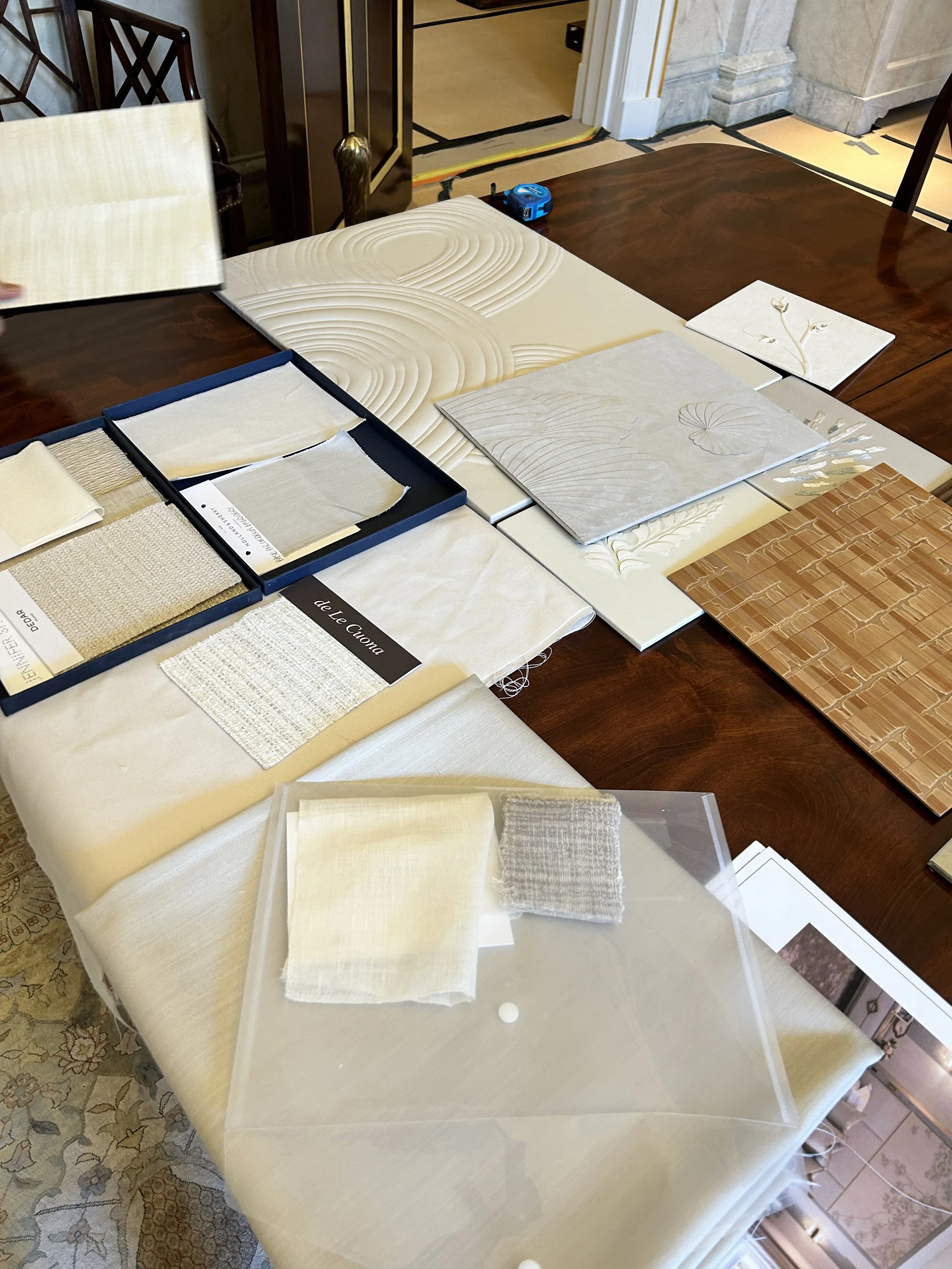
Preparing for a client presentation — large-format samples of approved fabrics and finishes laid out for final review.
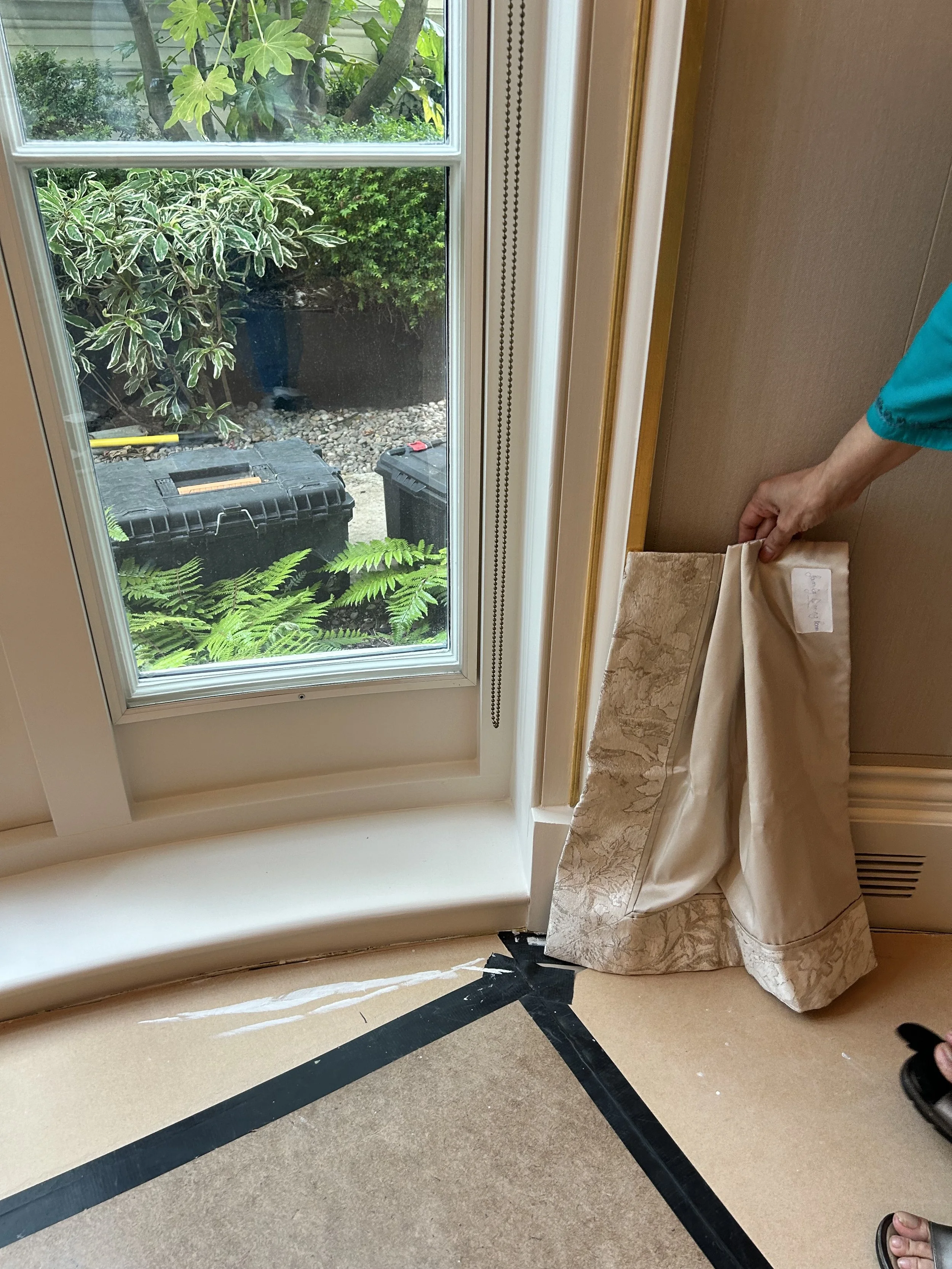
On site, reviewing a corner sample of Dedar silk curtain prepared for final client sign-off.
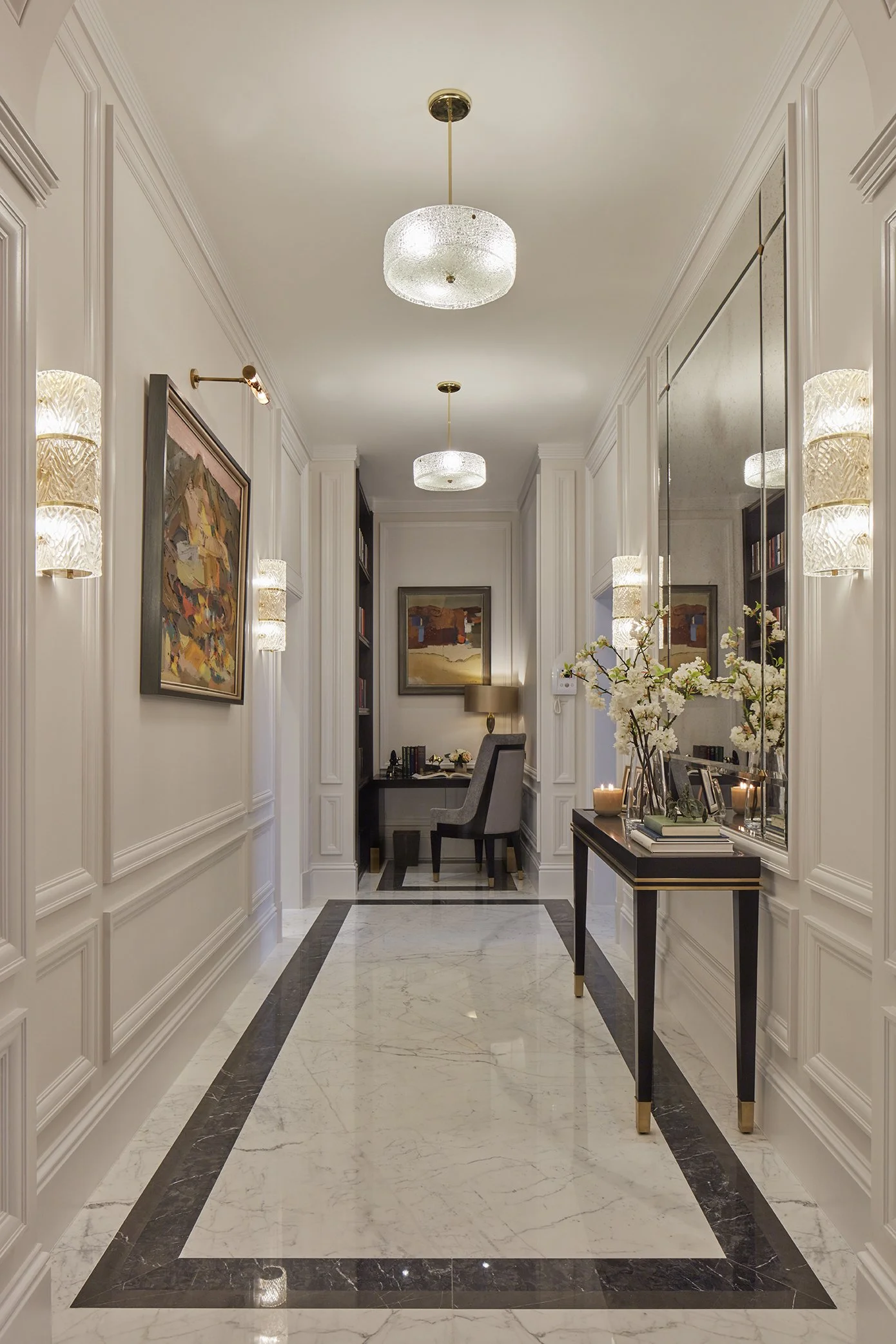
A completed Supremati project at 1 Carlos Place, Mayfair — entrance hall with marble-clad flooring, wall panelling, antique mirror insets, vintage lighting, and a study framed at the end of the corridor.