
Mayfair vs Belgravia — How We Design Differently for Each | Supremati's Notes
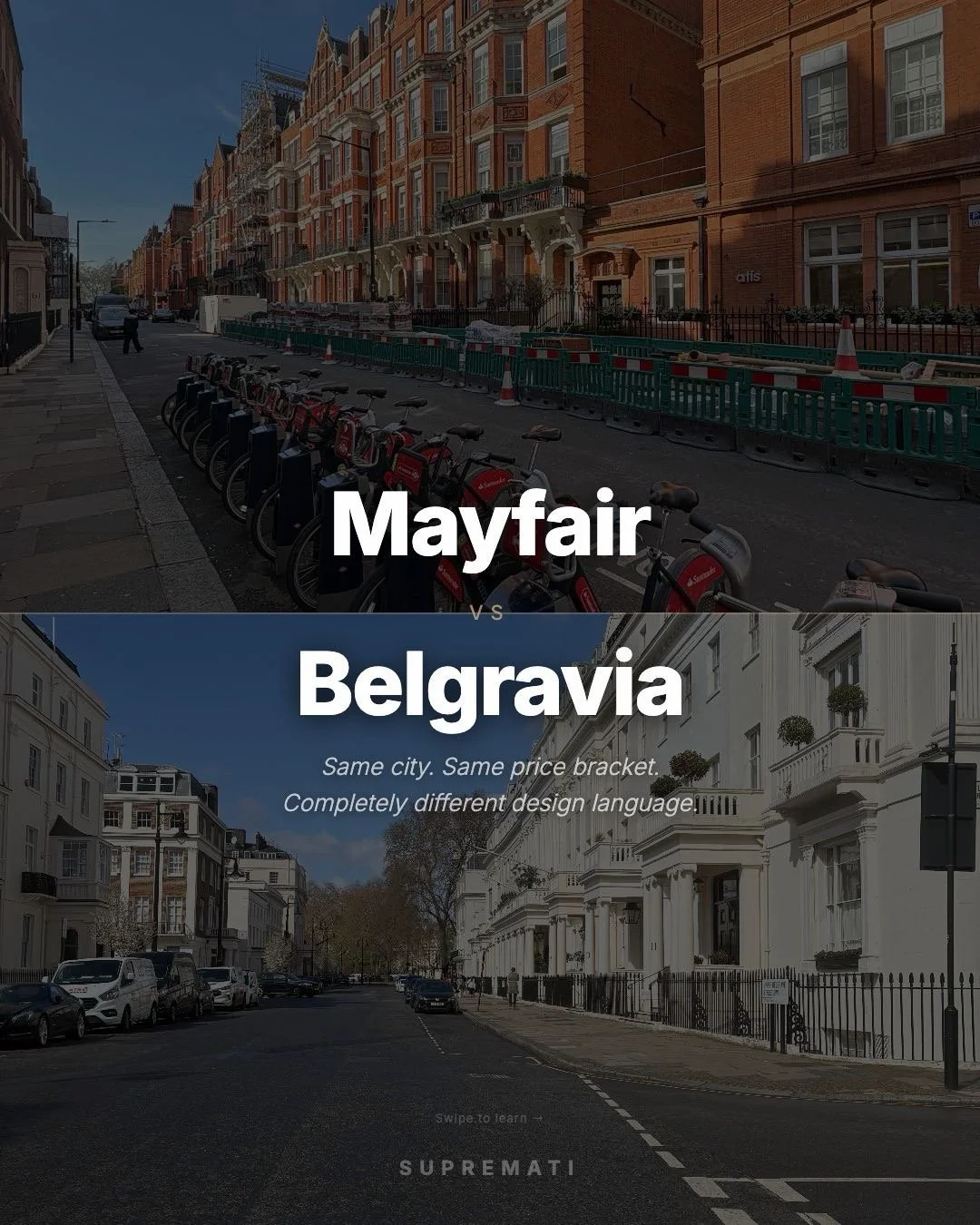
MAYFAIR VS BELGRAVIA
Two of London's most exclusive postcodes sit less than a mile apart. Same city, same price bracket, often the same buyers shortlisting properties in both before they choose. And yet the homes we've designed in Mayfair and Belgravia ask for almost entirely different things.
The differences aren't superficial. They run through the proportions of the rooms, the expectations of the clients, the way the neighbourhood itself shapes a sense of how a home should behave. After working on residential projects in both areas, we've come to believe that great design doesn't start with mood boards or material samples. It starts with the postcode — and with understanding what the postcode is asking for.
This article is for anyone considering a project in either neighbourhood, and for clients trying to articulate why one feels right and the other doesn't. The answer is usually clearer once you understand the architecture you're working inside.
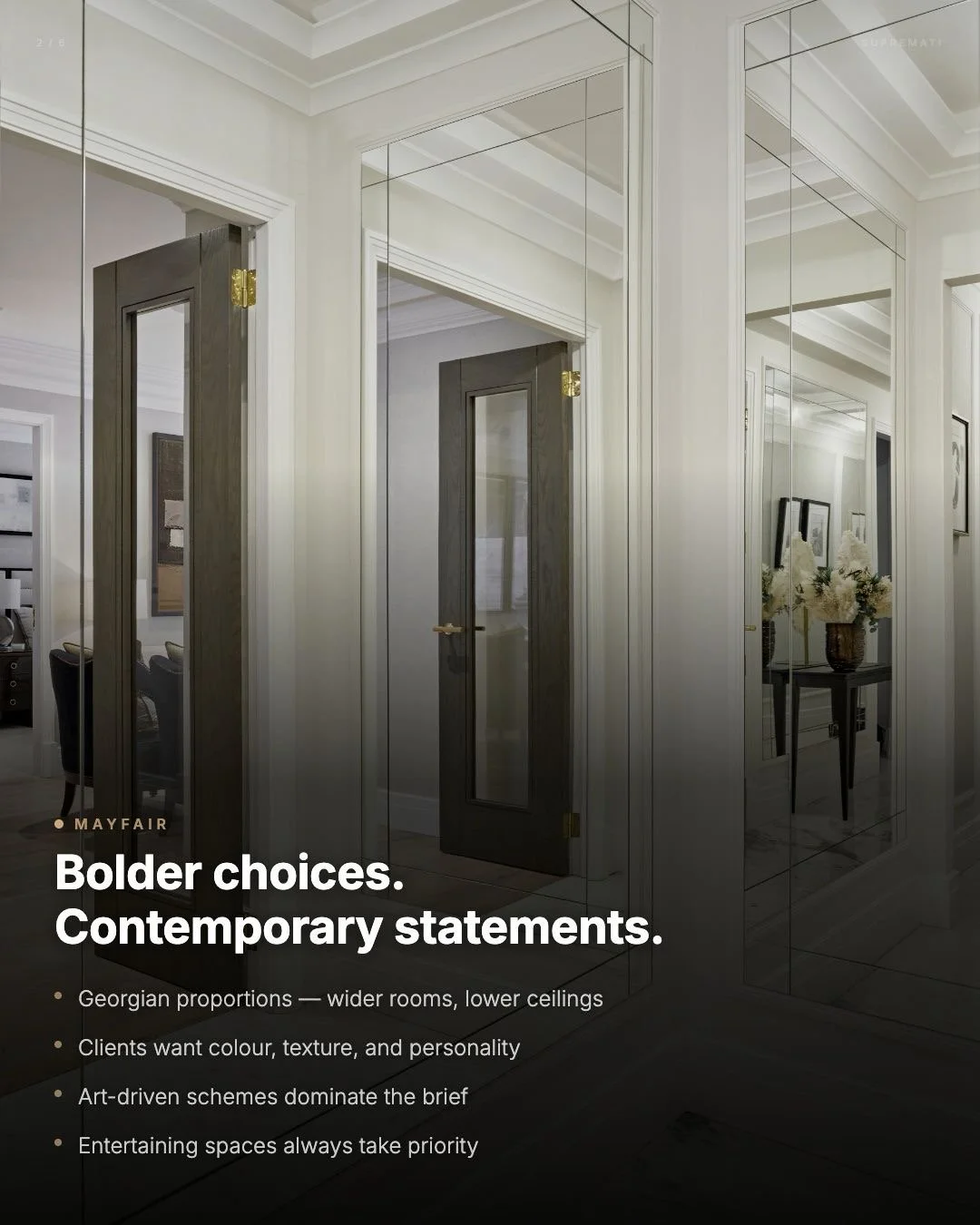
Mayfair: bolder choices, contemporary statements
Mayfair is largely Georgian, with pockets of Victorian and Edwardian intervention. The proportions tell you everything you need to know before the brief is even discussed. Rooms are wider than they are tall. Ceilings are lower than you'd expect for the prestige of the area. Hallways are generous. Floor plans tend to be horizontal in feel rather than vertical.
This architecture shapes the brief in ways most clients don't anticipate.
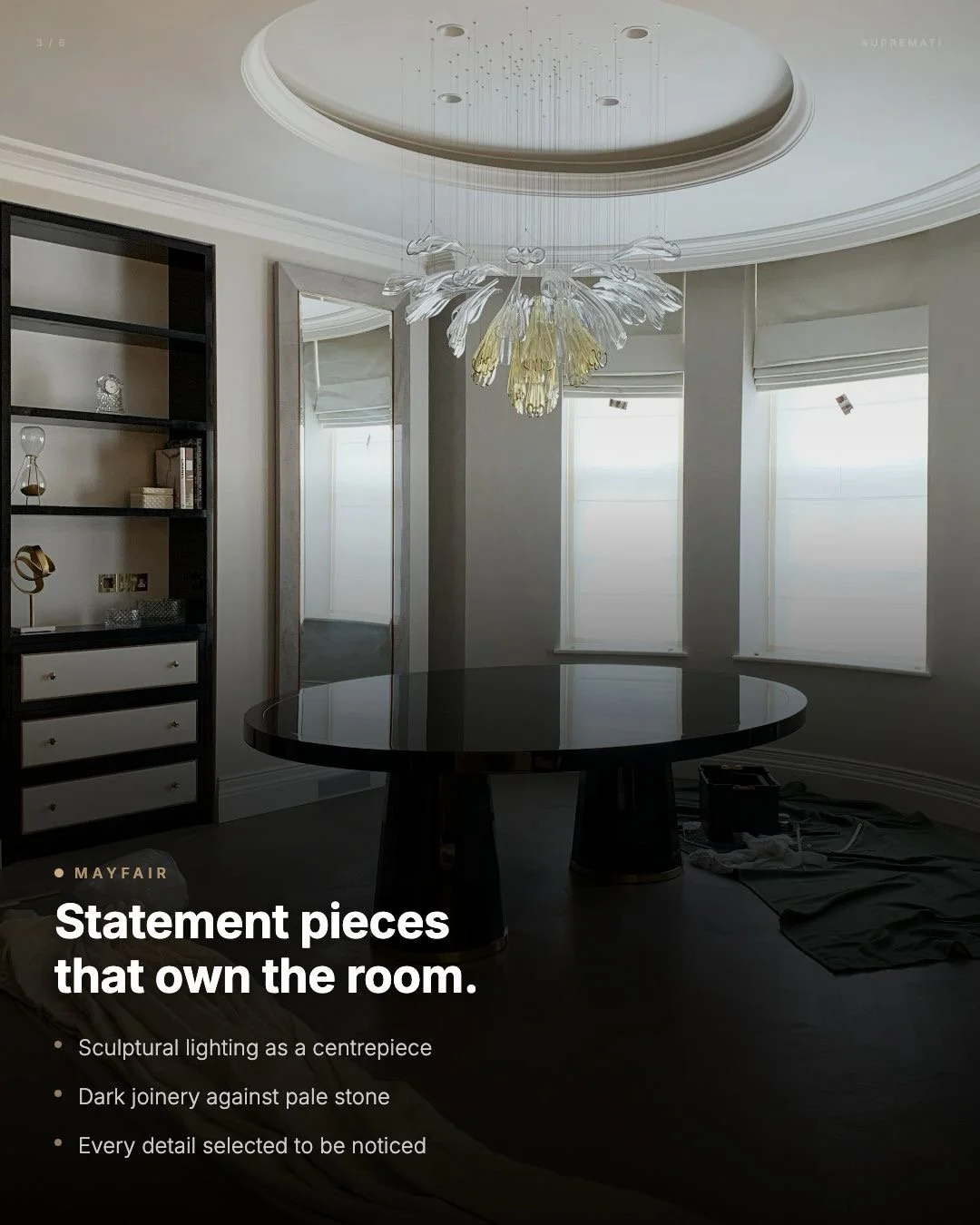
Clients in Mayfair tend to want bolder, more contemporary statements.
The Georgian envelope is restrained enough that it can absorb stronger contemporary intervention without losing its character. We see this consistently: clients who chose Mayfair specifically because they want a home that doesn't feel quiet. They want statement furniture. Sculptural lighting. Confident colour. The architecture itself has a kind of background formality that allows the foreground to take risks.
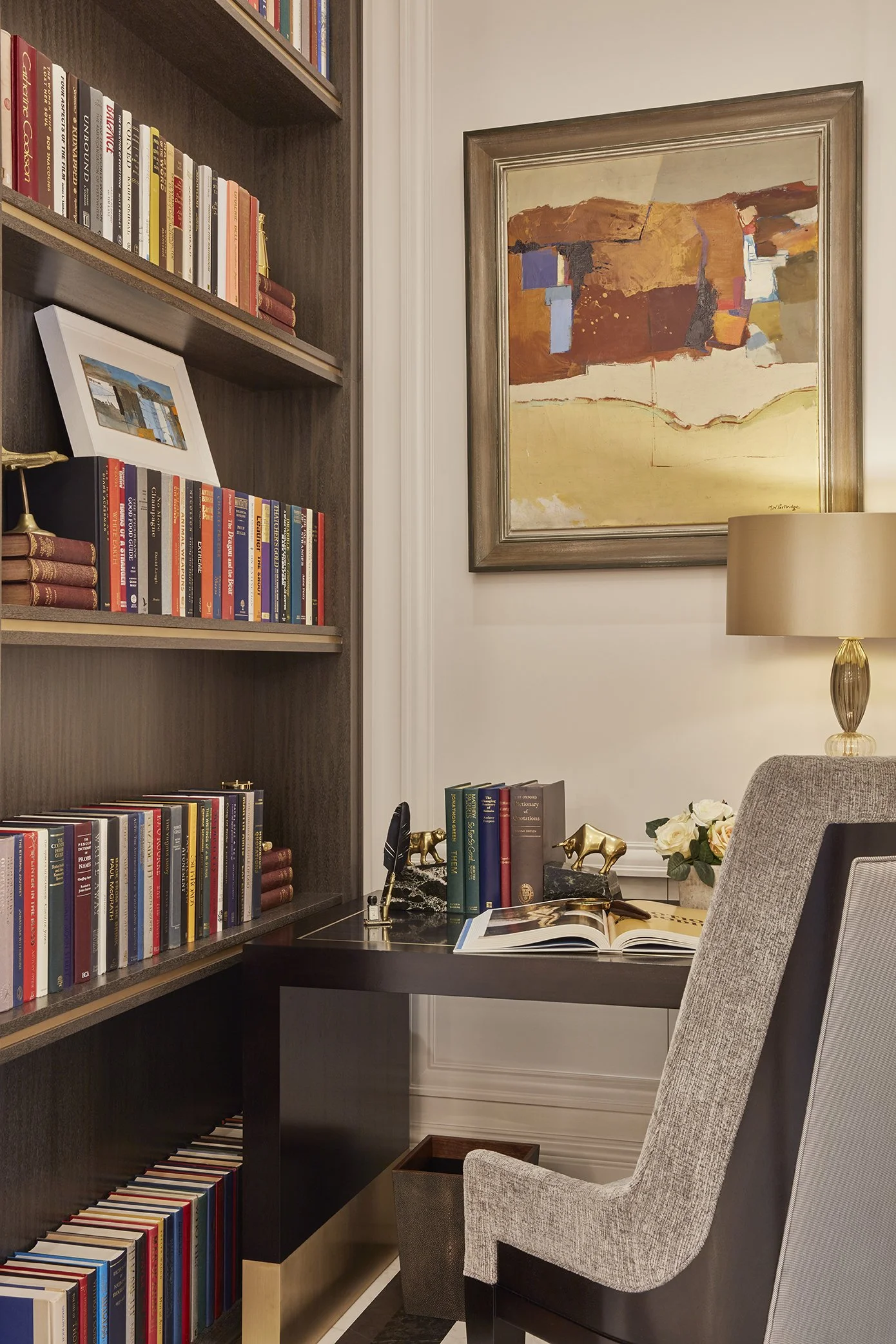
Art tends to drive the scheme.
Mayfair is the gallery district. Clients here often have serious art collections, and the interior is built around accommodating and lighting the work. Walls get planned for paintings before they get planned for furniture. Lighting design becomes a more technical conversation. We've worked on Mayfair projects where the joinery layout was determined entirely by where the client's existing collection needed to live.
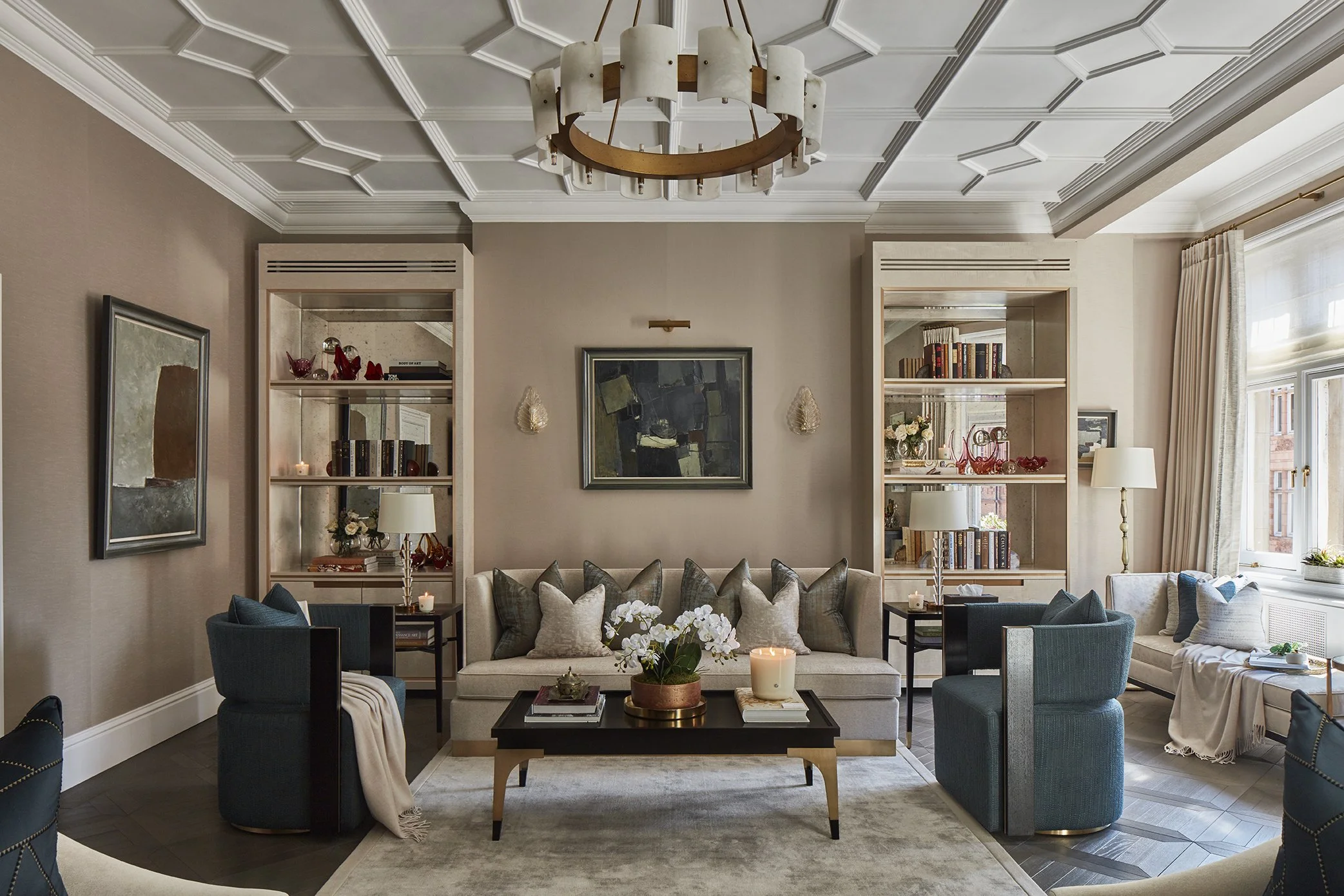
Entertaining spaces take priority.
Mayfair homes are designed to be seen. Drawing rooms, dining rooms, and reception spaces are typically over-resourced relative to the bedrooms and private quarters. Clients want spaces that hold ten people for dinner, that host gallery viewings, that work as the visible expression of their tastes. The brief almost always begins with "we entertain often".
We've seen this clearly across our Mayfair work. On a recent Mayfair apartment, the joinery, lighting, and reception planning were all built around the client's contemporary art collection — the architecture acted as a quiet frame for the work, never the other way around.
The risk in Mayfair is over-decoration. The temptation, given the contemporary licence the Georgian shell offers, is to keep adding statements until the rooms become busy. Our role is often to edit downward rather than upward — to choose two or three confident moves rather than ten incremental ones.
Belgravia: quieter luxury, private sanctuaries
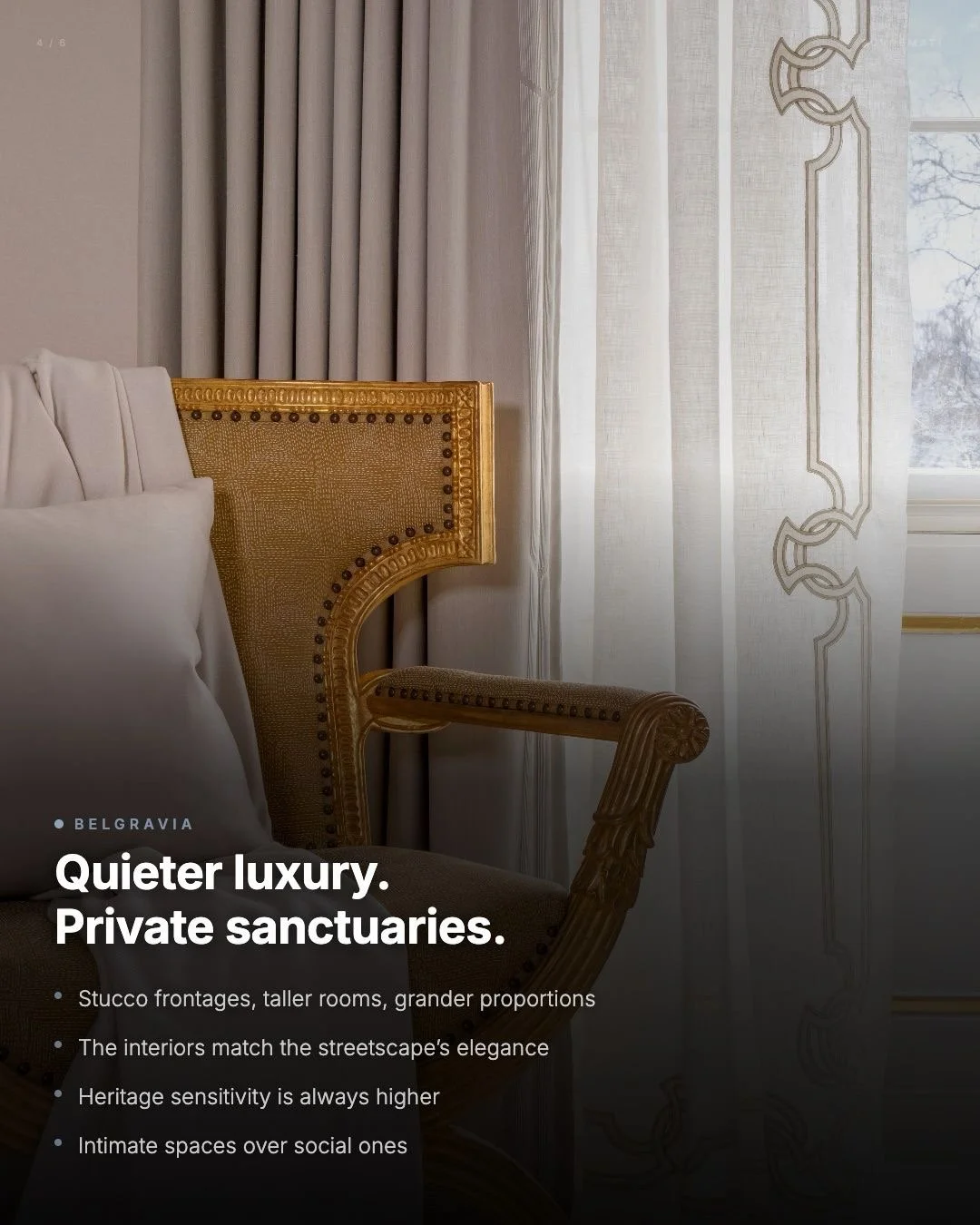
Belgravia is largely Regency, developed under Thomas Cubitt's master plan in the early-to-mid nineteenth century. The proportions are entirely different. Stucco frontages, taller rooms, grander floor-to-ceiling heights, more vertical drama. The streetscape itself is more theatrical — the white terraces of Eaton Square and Belgrave Square set a tone the interiors are expected to honour.
This architecture, in our experience, produces a different kind of client and a different kind of brief.
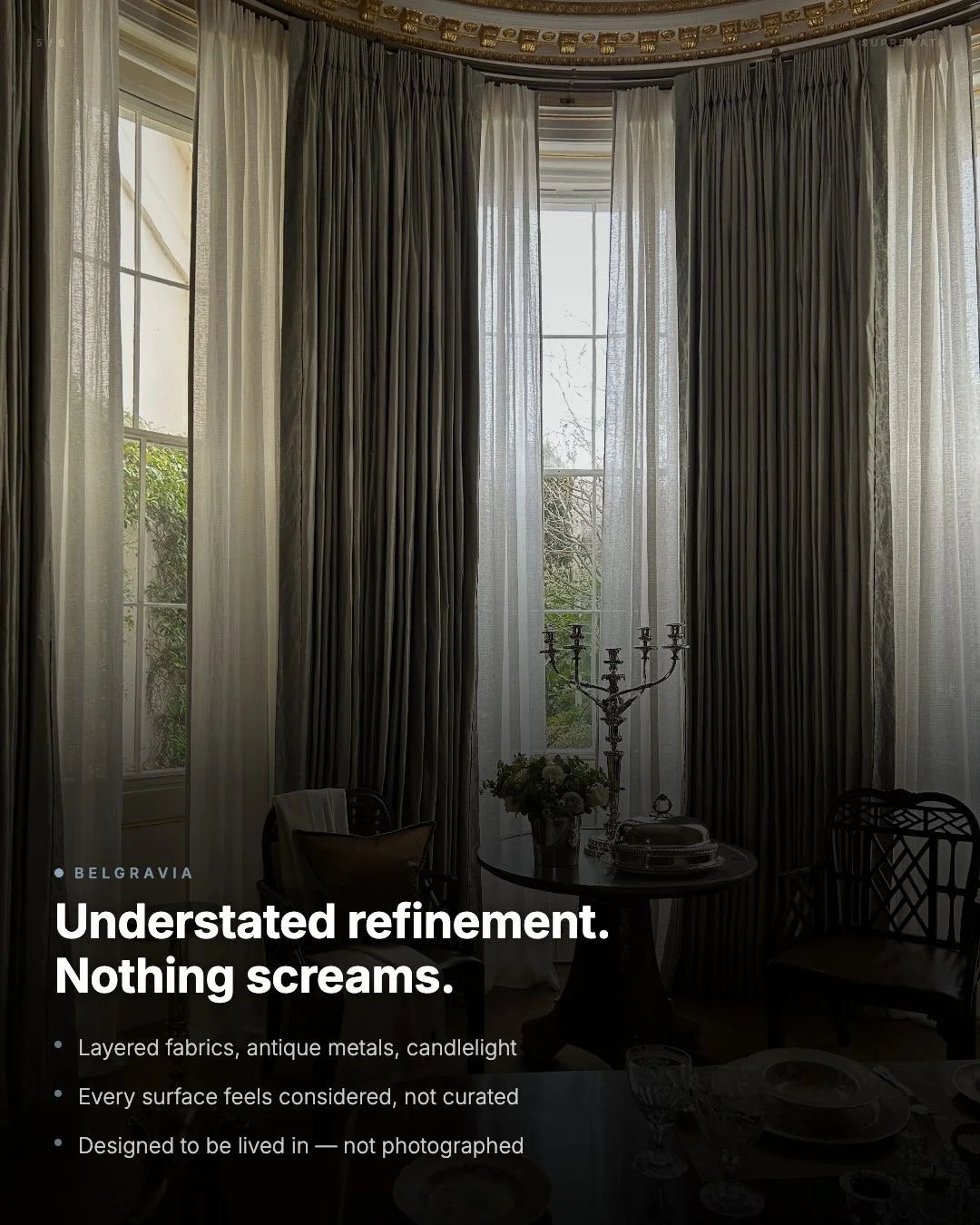
Clients in Belgravia tend toward quieter luxury.
The Regency proportions don't need help. The cornicing is grander, the windows are taller, the rooms are already inherently formal. The temptation to make a contemporary statement is much weaker here, because the architecture has already done the statement work for you. Most Belgravia clients we've worked with are explicit about not wanting interiors that compete with the building.
Heritage sensitivity is consistently higher.
Belgravia has more Grade I and Grade II listed properties per square mile than almost anywhere else in central London. Even unlisted Belgravia homes are usually within conservation areas. Clients tend to be more aware of this from the outset, and the briefs more often begin with what can't be changed than what can. The conversation is about restoration as much as it is about design.
Private sanctuaries take priority over social spaces.
Belgravia homes are bought, in many cases, by clients who already entertain elsewhere — at their members' clubs, at restaurants, at country houses. The London home in Belgravia is more often a refuge than a stage. The brief usually emphasises the master suite, the dressing rooms, the library, the snug — the spaces a family inhabits rather than displays. Drawing rooms exist, but they're calibrated to feel intimate rather than performative.
The contrast becomes clearest on heritage projects. Our Grade I listed townhouse refurbishment in Belgravia took three years to complete — much of which was spent in conversation with the original architecture itself. Every contemporary intervention had to earn its place against centuries of detail. The result is a home that feels intimate rather than performative, calibrated for the family that lives in it rather than the events it could host.
The risk in Belgravia is timidity. Working within the heritage constraints can produce interiors that feel deferential to the point of vanishing. Our role here is often the opposite of our Mayfair role: to find the moments where a confident contemporary move is appropriate, and to push the client to take them. The Regency shell can support more than it's often given credit for.Belgravia homes are bought, in many cases, by clients who already entertain elsewhere — at their members' clubs, at restaurants, at country houses. The London home in Belgravia is more often a refuge than a stage. The brief usually emphasises the master suite, the dressing rooms, the library, the snug — the spaces a family inhabits rather than displays. Drawing rooms exist, but they're calibrated to feel intimate rather than performative.
“Great design doesn’t start with mood boards or material samples. It starts with the postcode.”

How we approach each
The differences above shape the way we build a brief from the first meeting onward.
In Mayfair, we tend to design from the contemporary inward. We start with the major statement pieces — the lighting, the art, the joinery — and let the historical envelope hold them. Conversations about colour and material happen early. The visual identity of the home is decided before the room-by-room planning is finalised.
In Belgravia, we tend to design from the architecture outward. We start with the proportions, the cornicing, the original features. The contemporary moves come second, and they're chosen to amplify what's already there rather than to compete with it. Material palettes tend to be quieter, fabrics more layered, finishes more aged.
Both approaches produce homes the clients love. Both, done well, feel inevitable to anyone who walks into them. But they're not interchangeable. A Mayfair scheme dropped into a Belgravia home would feel showy. A Belgravia scheme in a Mayfair home would feel underwhelming.
This is what we mean when we say great design starts with the postcode. The address tells you the architectural era, which tells you the proportions, which shape what the rooms can hold, which influences what the client is likely to want, which determines the brief before the brief has been written.
A note for clients
If you're choosing between a Mayfair flat and a Belgravia townhouse — or already own in one and are wondering why the other feels different in a way you can't quite articulate — the difference is real, and it has a name. It's not just personal taste. It's the architecture, the heritage register, the social function each neighbourhood was originally built to perform. London's most exclusive postcodes have surprisingly distinct design personalities, and the homes inside them work best when those personalities are respected.
We design in both. We approach them differently. If you're planning a project in either area and want a studio that understands how the postcode shapes the brief, we'd be glad to talk.
See our Mayfair projects. See our Belgravia projects. Contact us here.